If you’re searching for how to register my dog in Gregg County, Texas, the most important thing to know is that “registration” is usually handled locally (by a city animal control department or an animal shelter that provides animal control services), not as a single, countywide online process. In practice, many residents use a “dog registration” or “license” to mean proving current rabies vaccination, getting a tag (where required), and ensuring the correct local office has the information needed if your dog is lost or involved in a bite incident.
This page explains how a dog license in Gregg County, Texas typically works, where to start depending on your address, and how rabies rules affect licensing and enforcement. You’ll also find clear guidance on the difference between pet licensing and the legal rules for service animals and emotional support animals.
Where to Register or License Your Dog in Gregg County, Texas
Because rules and paperwork are commonly managed at the city level, below are several example official offices within Gregg County that residents often contact to ask where to register a dog in Gregg County, Texas. Contact the office that matches your address (inside city limits vs. outside city limits) and ask what they require for a local dog license, tag, or registration record.
Longview Animal Care and Adoption Center
City of Kilgore Animal Control
City of White Oak Police Department (Animal Control Reporting)
Overview of Dog Licensing in Gregg County, Texas
What “registering your dog” usually means
In everyday terms, “registering” a pet in Texas can refer to a few different things: obtaining a local city license or tag, ensuring the dog’s rabies vaccination is current and documented, and maintaining identification (tag and/or microchip) so the animal can be returned if found. In Gregg County, the key detail is that there often isn’t one single countywide pet licensing department for all residents—many requirements are set and enforced by the city you live in.
Why the rules can differ from one address to another
Gregg County includes multiple municipalities and service areas. Animal control, sheltering, bite investigations, and rabies enforcement can be handled by city animal control departments, city police departments, or a shelter that provides animal control functions for participating communities. That’s why two neighbors in the same county can have different steps for a dog license in Gregg County, Texas depending on city limits, utility service boundaries, or contract coverage.
Rabies vaccination is the common foundation
Whether your city requires a formal license tag or not, rabies vaccination requirements and proof are central to responsible ownership and to how local authorities handle bites, quarantine decisions, and reclaiming a lost dog from a shelter. Many local programs connect “registration” to the rabies certificate timeline, and owners are typically expected to keep documentation available.
How Dog Licensing Works Locally in Gregg County, Texas
Step 1: Confirm which local authority serves your address
To complete an animal control dog license Gregg County, Texas process correctly, start by confirming the appropriate local agency for your home address:
- Inside Longview city limits: Start with the Longview Animal Care and Adoption Center.
- Inside Kilgore city limits: Start with Kilgore Animal Control.
- Inside White Oak city limits: Animal control reports are routed through the White Oak Police Department (and the city states registration is not mandatory there).
- Outside city limits (unincorporated Gregg County): Call a nearby city animal control/shelter and ask which authority handles animal control response and rabies enforcement for your location.
Step 2: Make sure rabies vaccination is current and documented
A current rabies vaccination is commonly required for dogs and is a frequent prerequisite to any tag or local registration record. Keep your rabies certificate from your veterinarian, and keep a copy accessible (paper or digital) in case an animal control officer requests proof—especially after a bite incident, a reclaim at a shelter, or a compliance check.
Step 3: Ask the local office what “license” means for your city
When you call or visit, use direct wording so you don’t get stuck in terminology differences. For example:
- “Do you require a dog license in Gregg County, Texas for my address, or is the rabies certificate sufficient?”
- “Do you issue a city tag, and is it tied to the rabies expiration date?”
- “Do you keep an owner registration record on file, and what information do you need?”
- “If my dog is microchipped, do you recommend adding the chip number to your record?”
Step 4: Keep ID on your dog (and update it when things change)
Even when formal licensing is limited, identification is one of the most practical “registration” steps you can take. Use a collar tag with your phone number (and any city tag if issued), and consider microchipping. If you move within Gregg County, re-check which local agency covers your new address so your registration/license expectations stay correct.
Service Dog Laws in Gregg County, Texas
A dog license is not the same as service dog status
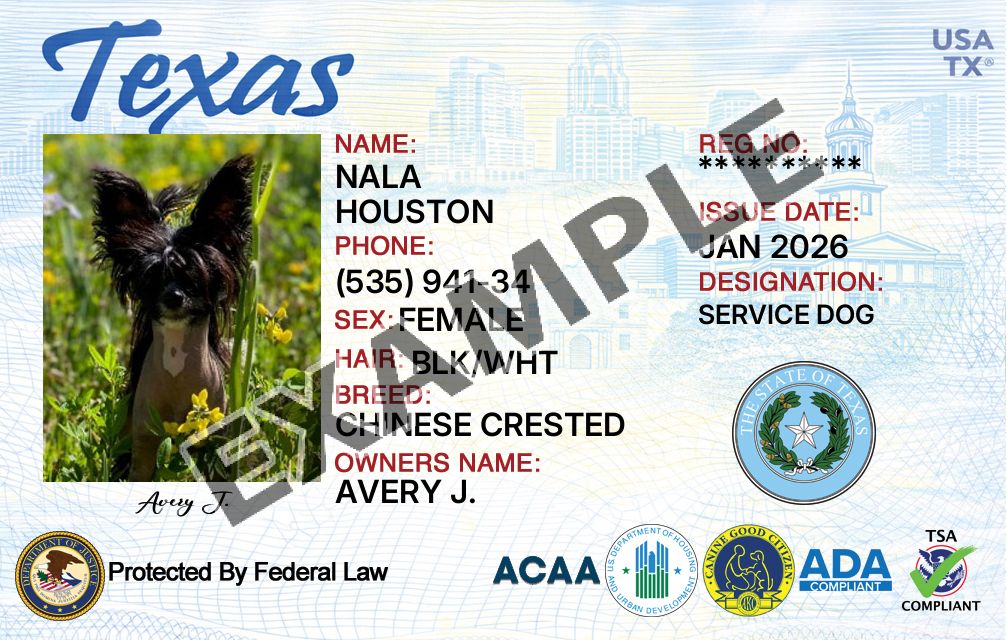
A local dog license (or city registration/tag) is a pet ownership compliance tool—usually tied to rabies vaccination, identification, and local animal ordinances. Service dog status, by contrast, is based on disability law and the dog’s trained work or tasks. Getting a city license does not “make” a dog a service animal, and a dog being a service animal does not automatically replace local rabies compliance or other lawful animal control requirements that apply to all dogs.
What typically applies to service animals locally
While service animals have legal access protections in many public settings, local rules about rabies vaccination, leash/at-large restrictions, and bite/quarantine procedures can still apply. If you’re unsure how local licensing policies apply to a working service dog, ask the local animal control office whether they issue tags for service animals and what documentation (if any) is required for their records—without assuming there is a special “service dog license” category.
Emotional Support Animal Rules in Gregg County, Texas
Emotional support animals (ESAs) are different from service dogs
An emotional support animal provides comfort by presence, but ESAs are not the same as trained service animals. For most day-to-day public access situations, an ESA does not have the same access rights as a service dog. That distinction matters because owners sometimes assume an ESA letter replaces local pet rules—generally, it does not.
ESAs generally still follow local licensing and rabies rules
If your city requires a local dog license, tag, or registration record, an ESA is typically treated as a pet for licensing purposes. In other words, if you’re asking how to register my dog in Gregg County, Texas and your dog is an ESA, you should still be prepared to provide rabies vaccination proof and follow the same local procedures and fees that apply to other pet dogs.
Frequently Asked Questions
It depends on your local jurisdiction (city limits vs. unincorporated county area). Some cities require a local license/tag tied to rabies vaccination, while others may not require formal registration but still enforce rabies vaccination, leash/at-large rules, and bite quarantine procedures. If you want the most accurate answer for your address, call the local animal control office serving your location and ask what their current dog licensing or registration requirements are.
When people search “animal control dog license Gregg County, Texas,” the right starting point is usually the city animal control or the regional animal care center that serves multiple participating communities.
Most offices start with rabies vaccination proof. Many also ask for owner identification and a way to confirm residency if the license is city-based. Some offices may record your dog’s description, spay/neuter status, and microchip number (if available). Requirements can vary, so it’s best to confirm directly with the office you plan to use.
If you’re comparing options for where to register a dog in Gregg County, Texas, choose the office responsible for your address, then ask for their current checklist and fee schedule.
Not always. A rabies tag commonly indicates your veterinarian administered a rabies vaccine and provided a certificate. A city dog license (when required) is a separate local compliance item that may be issued by a city or animal control authority and may require a fee and an application/record. In some places, the two are closely linked (for example, the city license period may track the rabies vaccine period), but they aren’t automatically identical.
If you’re unsure which one your local rules require, ask your city animal control office what they consider a “license” versus proof of vaccination.
Service dogs are not “licensed” into service dog status by a city tag. However, local public health and animal control rules—especially rabies vaccination requirements and bite/quarantine procedures—can still apply. If your city issues a dog license/tag for residents, ask whether they require (or optionally provide) a tag for service animals and what documentation they need for their records.
Typically, no. An ESA status does not usually replace local requirements for rabies vaccination proof, local dog licensing/tag rules (if your city requires them), or animal control enforcement. If you’re completing a local dog license in Gregg County, Texas, plan to follow the same licensing steps and provide the same documentation required for other pet dogs.
Disclaimer
Licensing requirements and office locations may change. Residents should verify details with their local animal services office within Gregg County, Texas.